Disclaimer: This article is intended solely for informational and educational purposes only. It does not constitute medical advice.
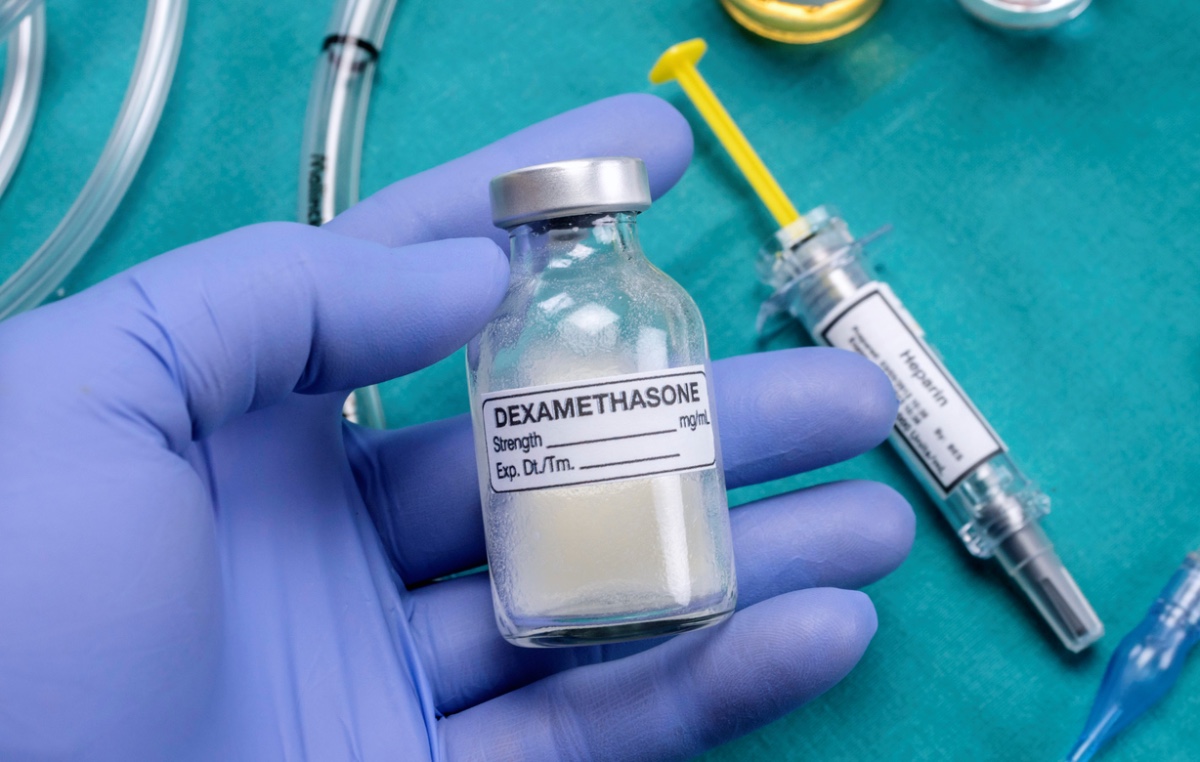
Dexamethasone is a potent synthetic glucocorticoid with uses across a wide range of clinical settings due to its anti-inflammatory and immunosuppressive properties (Johnson et al., 2023). It suppresses neutrophil migration, reduces lymphocyte proliferation, decreases capillary permeability, and inhibits several pro-inflammatory cytokines. Established indications include cerebral edema, shock, acute exacerbations of multiple sclerosis, allergic and dermatologic conditions, and diagnostic testing for Cushing syndrome, while off-label clinical uses of dexamethasone include treating nausea and vomiting due to chemotherapy and anesthesia (Johnson et al., 2023). In some scenarios, dexamethasone has also been found to improve postoperative analgesia.
A clinical study on the treatment of adult bacterial meningitis randomized 301 patients to dexamethasone 10 mg or placebo every six hours for four days, alongside antibiotics (de Gans & van de Beek, 2002). Dexamethasone reduced unfavorable outcomes at eight weeks (15% vs. 25%; relative risk 0.59; 95% CI 0.37 to 0.94) and mortality (7% vs. 15%; relative risk 0.48; 95% CI 0.24 to 0.96).
The benefit was most pronounced in pneumococcal meningitis, where unfavorable outcomes occurred in 26% of treated patients versus 52% of controls, whereas no significant benefit was demonstrated in meningococcal disease, although the subgroup was small. Gastrointestinal bleeding and other adverse events were not significantly increased. The authors recommended treatment for all adults with acute bacterial meningitis and advised close observation of patients with pneumococcal meningitis who receive vancomycin concurrently, given theoretical concerns about reduced antibiotic penetration into the subarachnoid space (de Gans & van de Beek, 2002).
Dexamethasone has also been used to treat COVID-19 patients. The RECOVERY trial randomized 6425 hospitalized patients to dexamethasone 6 mg daily for up to ten days or usual care (RECOVERY Collaborative Group, 2021). Twenty-eight-day mortality was lower with dexamethasone (22.9% vs. 25.7%; age-adjusted rate ratio 0.83; 95% CI 0.75 to 0.93). The effect depended on respiratory support at randomization: mortality fell among patients receiving invasive mechanical ventilation (29.3% vs. 41.4%) and those receiving oxygen alone (23.3% vs. 26.2%) but not among those requiring no oxygen (17.8% vs. 14.0%; rate ratio 1.19; 95% CI 0.92 to 1.55), where the results were consistent with possible harm.
Dexamethasone also increased the likelihood of successful ventilator weaning and reduced the need for renal replacement therapy. Serious adverse reactions considered related to treatment were rare and included hyperglycemia, gastrointestinal hemorrhage, and psychosis. Dexamethasone is therefore recommended for severe Covid-19 requiring oxygen or ventilatory support but not for mild to moderate disease (Johnson et al., 2023; RECOVERY Collaborative Group, 2021).
In the perioperative setting, dexamethasone is widely used to prevent postoperative nausea and vomiting, and a meta-analysis of 45 randomized trials involving 5796 patients examined its analgesic effects at single intravenous doses of 1.25 to 20 mg (Waldron et al., 2013). Compared with control, dexamethasone modestly lowered pain scores at 2 hours (mean difference −0.49) and 24 hours (−0.48) on a 10-point scale, reduced 24-hour opioid consumption by 2.33 mg morphine equivalents, and decreased the need for rescue analgesia.
No dose-response relationship was found for opioid sparing. The authors concluded that these effects were small and of uncertain clinical relevance but that the drug’s antiemetic benefit may justify its use. No increase in infection or delayed wound healing was observed, though blood glucose was higher at 24 hours (mean difference 0.39 mmol/L). Patients at highest risk of steroid-related complications were often excluded from the underlying trials (Waldron et al., 2013).
Common adverse effects of glucocorticoids include insomnia, fluid retention, electrolyte disturbance, hyperglycemia, and mood changes, while prolonged use carries risks of adrenal suppression, osteoporosis, osteonecrosis, cataracts, glaucoma, and myopathy. Live vaccines are contraindicated, latent infections such as strongyloidiasis may reactivate, and use in pregnancy warrants caution (Johnson et al., 2023). Monitoring of glucose, electrolytes, and blood pressure is advisable, and prolonged courses should be tapered rather than withdrawn abruptly.
Research supports dexamethasone as an effective anti-inflammatory agent with uses in infectious disease and the perioperative setting, among other clinical scenarios.
References
- de Gans, J., & van de Beek, D. (2002). Dexamethasone in adults with bacterial meningitis. New England Journal of Medicine, 347(20), 1549–1556. https://doi.org/10.1056/NEJMoa021334
- Johnson, D. B., Lopez, M. J., & Kelley, B. (2023). Dexamethasone. In StatPearls. StatPearls Publishing. https://www.ncbi.nlm.nih.gov/books/NBK482130/
- RECOVERY Collaborative Group. (2021). Dexamethasone in hospitalized patients with Covid-19. New England Journal of Medicine, 384(8), 693–704. https://doi.org/10.1056/NEJMoa2021436
- Waldron, N. H., Jones, C. A., Gan, T. J., Allen, T. K., & Habib, A. S. (2013). Impact of perioperative dexamethasone on postoperative analgesia and side-effects: Systematic review and meta-analysis. British Journal of Anaesthesia, 110(2), 191–200. https://doi.org/10.1093/bja/aes431