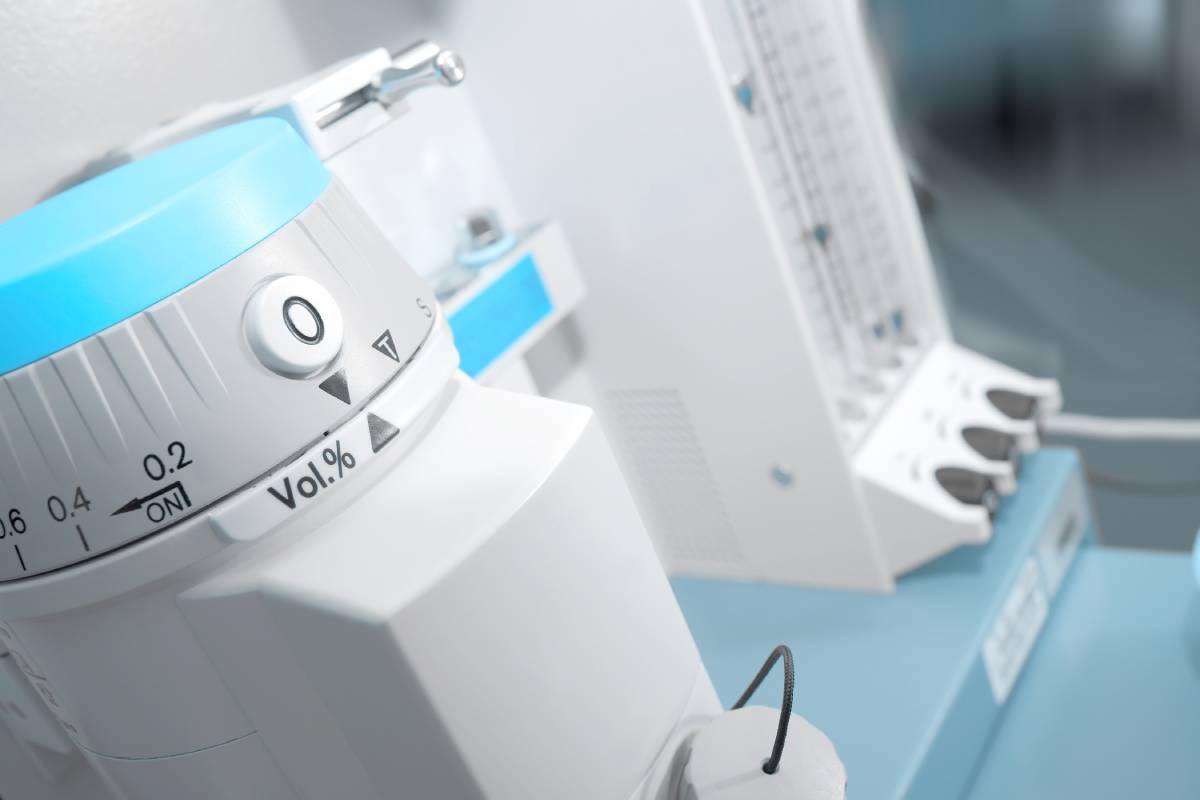
Volatile anesthetics have been shown to modulate neurotransmitter release across multiple brain regions. For example, halothane attenuates haloperidol-induced dopamine release, while isoflurane increases γ-aminobutyric acid (GABA) but decreases glutamate release.1 Psychostimulant reinforcement is known to depend critically on dopamine activation;2 it has been proposed that the enhancement of GABAergic neurotransmission and the subsequent inhibition of dopamine can reduce the addictive effects of cocaine.3 The literature suggests isoflurane, which increases GABA release and prolongs GABA-mediated inhibition, may influence addiction by changing the behavioral effects of addictive substances.
In a 2022 study from Korea examining drug- or food-reinforced behavior, rats were trained to self-administer cocaine, nicotine, or food tablets under fixed-ratio schedules. In this within-subjects design, rats were exposed to 1% or 2% isoflurane for 10 minutes.4 Under a fixed-ratio schedule, isoflurane significantly reduced cocaine self-administration, with rats that received 2% isoflurane exhibiting decreased active lever presses and cocaine infusions at both dosage concentrations. Both 1% and 2% isoflurane notably reduced cocaine-seeking at the lower cocaine dose (0.25 mg/kg), while only 2% isoflurane produced significant reductions in cocaine-seeking at the higher cocaine dose (0.5 mg/kg). All rats exposed to 2% isoflurane were also assessed with regards to nicotine self-administration.
Isoflurane significantly decreased active lever presses and nicotine consumption at both 20 and 120 minutes. Importantly, this study measured both active and inactive lever presses. Both tests (cocaine and nicotine self-administration) demonstrated reduced active lever presses but showed no effect on inactive lever presses. As such, these findings can be interpreted as the result of selective effects on motivated behavior and not a general suppression of movement. In other words, isoflurane reduced drug-seeking behavior, a facet of addiction, and did not simply make the rats less active.4
Interestingly, isoflurane did not reduce food pellet (natural reward) self-administration, contrasting with the suppressive effects on cocaine and nicotine intake. This suggests that the drug-related reductions are not simply due to impaired subject performance.
Exactly how isoflurane inhibits drug-reinforced behavior is not fully understood. However, existing evidence suggests it could depend on dopamine release. For example, a study in laboratory animals demonstrated isoflurane can reduce exocytosis from midbrain dopaminergic neurons.5 The researchers found that isoflurane reversibly inhibited dopamine uptake in rat brain synaptosomes in a concentration-dependent, noncompetitive manner, without stimulating dopamine release. These findings offer a mechanistic explanation for volatile anesthetic–induced increases in extracellular dopamine observed in micro-dialysis studies.5
The evidence suggests that isoflurane meaningfully influences addiction-related behaviors by modulating key neurotransmitter systems involved in reinforcement. Across studies, isoflurane enhances GABAergic inhibition, alters glutamatergic signaling, and interferes with dopaminergic transmission (including the reversible inhibition of dopamine uptake), which are all mechanisms that dampen the motivational drive for addictive substances. Behavioral data from self-administration models show that isoflurane selectively reduces cocaine- and nicotine-seeking without impairing normal activity or natural reward consumption, further supporting a targeted rather than generalized suppressive effect. These findings indicate isoflurane may attenuate the reinforcing properties of addictive drugs through its combined actions on GABA and dopamine pathways, offering important insight into how volatile anesthetics interact with the neurobiology of addiction.
References
1. Kotani N, Akaike N. The effects of volatile anesthetics on synaptic and extrasynaptic GABA-induced neurotransmission. Brain Research Bulletin. 2013;93:69-79. https://doi.org/10.1016/j.brainresbull.2012.08.001
2. Tsai HC, Zhang F, Adamantidis A, et al. Phasic firing in dopaminergic neurons is sufficient for behavioral conditioning. Science (New York, NY). 2009;324(5930):1080-1084. https://doi.org/10.1126/science.1168878
3. Gardner EL, Schiffer WK, Horan BA, et al. Gamma‐vinyl GABA, an irreversible inhibitor of GABA transaminase, alters the acquisition and expression of cocaine‐induced sensitization in male rats. Synapse. 2002;46(4):240-250. https://doi.org/10.1002/syn.10138
4. Yoon SS, Lee BH, Lee SH, et al. Effects of isoflurane anesthesia on addictive behaviors in rats. Psychopharmacology. 2022;239(11):3621-3632. https://doi.org/10.1007/s00213-022-06236-z
5. El-Maghrabi E A., Eckenhoff R G. Inhibition of Dopamine Transport in Rat Brain Synaptosomes by Volatile Anesthetics. Anesthesiology. 1993;78(4):750-756. https://doi.org/10.1097/00000542-199304000-00019